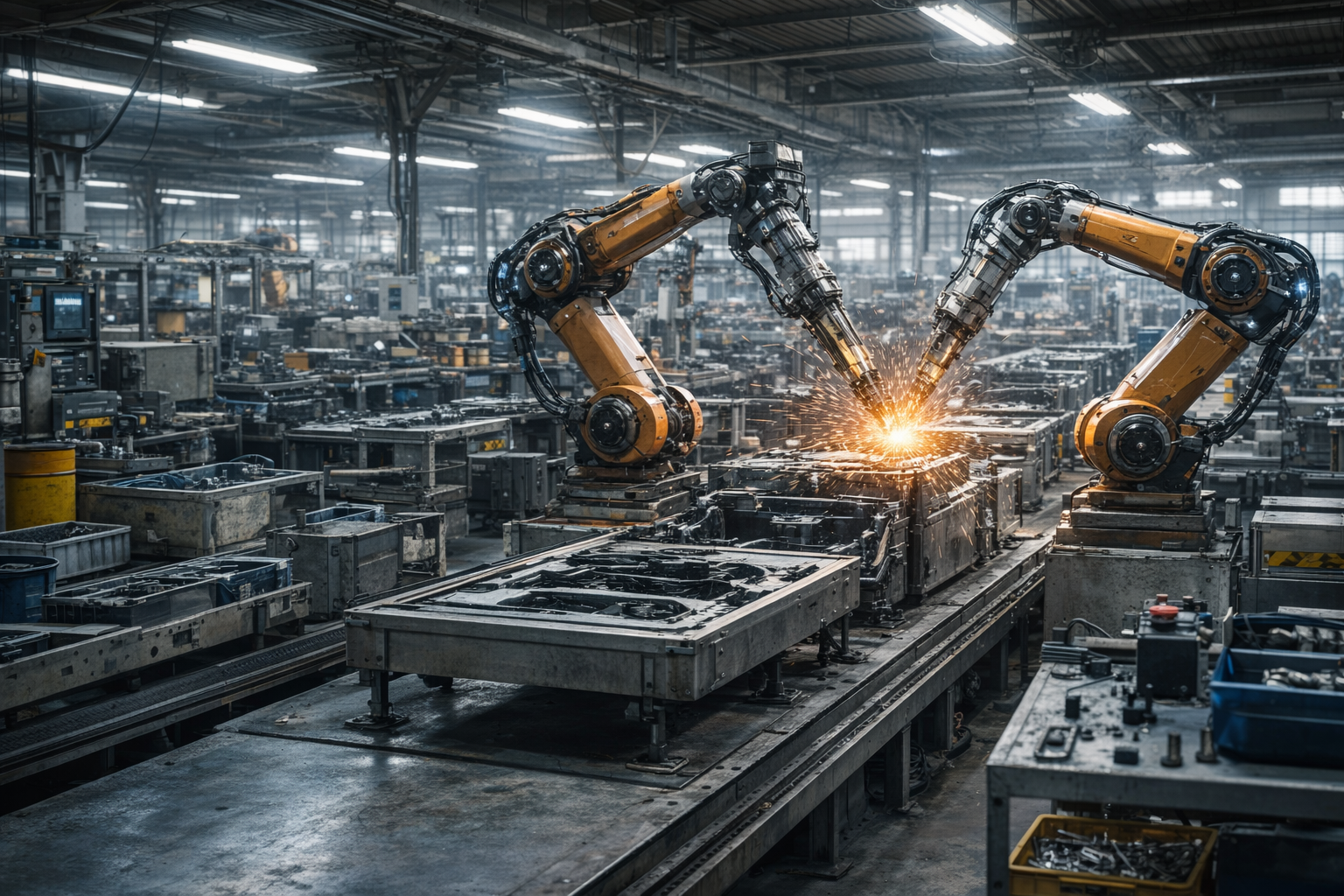
A single industrial robot generates tens of thousands of signals per hour. When an incident happens, teams don't get answers—they get logs.
14:23:07 | WARN  | Motor_LeftArm | torque_spike | value=847
14:23:08 | ERROR | Motor_LeftArm | position_error | deviation=12.7deg
14:23:09 | CRIT  | Safety_System | collision_warning | triggered=true
14:23:10 | CRIT  | emergency_stop | source=safety_system
Four lines. Four subsystems. Zero understanding.
Most tools respond with:
"Anomaly detected. Confidence: 0.81."
That's not intelligence.
That's uncertainty with better formatting.
Aurel ingests raw robotic data and produces clear, human-readable intelligence reports that explain what happened, why it matters, what to investigate, and how conclusions were reached.
Think of Aurel like a compiler error—not rewriting reality, explaining where it broke.
A humanoid robot halts during operation at an assembly line. No collision. Production stopped. Investigation required.
The robot's left arm deviated from its planned path while an unidentified object entered its operating zone. A camera frame drop created a temporary blind spot during escalation. The safety system halted the robot before contact.
This is the difference between logs and intelligence.
Aurel connects directly to existing robotic data streams. No changes required.
Events are correlated across subsystems into causal sequences. Intelligence methodology—not black-box prediction.
Every report is reviewed by a human analyst. No unexplainable outputs. No automated blame.
"Anomaly detected."
"Here's what happened. Here's why. Here's what to check. Here's how we know."
Factories. Warehouses. Hospitals. Public spaces. Where failure has physical consequences.
Every conclusion traces back to raw data. When regulators ask why, we already have the answer.
Vankadel operates like a real intelligence environment. Analysts reconstruct real incidents. Reports are validated, not auto-generated. Outputs are written to be defended.
This creates safer systems—and analysts who actually know what they're doing.
Intelligence for robotic and cyber-physical systems.
The intelligence layer for any complex system humans must trust, audit, and control.
 Vankadel